Stories Of My Irish Families

Irish Native/Planter Stories

Monday, 6 April 2026

57.  Hiatus & what it helped me to deal with (inc. vent of frustrations).

The past couple of years, I've been in quite the hiatus, as stories ran sort of quiet.
I sat on a couple of (ok, a few) projects, that's been quite the "ongoing" story or is now the case of "never ending"??

Though I have just come back from a trip to Adelaide, South Australia that has reinvigorated my mind again.
With the view of searching for a "instinctive story", I went to Adelaide, looking to see if there were communications between 2 cousins. This story was just a pure "gut feeling", with a story on why my lineage didn't become an "Adelaidean" so to speak.
I was looking for historical connections to 2 Colonial Families (Newenham's & Pitman's) & as I sit here now, I found more than I bargained for, because I found another family story to Kapunda with the Blood family (which wasn't known till 2 weeks after the trip).

This Adelaide trip was absolutely instrumental to understanding my distant lineages mindset, it answered my question (about communication between 2 Cousins) in the most mind boggling way.
It wasn't directly answered, I had to put it together & read between lines. Just after the trip, 1 document I found in the Cork Archives - dated in 1824 that was sent from Dublin to France, unbelievably validated the trip. Family notes I have that were written in Australia - that is roughly dated to 1867, said the exact same thing, but with a twist of "cousinage". Family names mentioned in both documents validate that they knew each other & were talking together through "Cousin Networks" (The old "I know a Cousin who knows a Cousin" trick). 
But that's for another blog entry later.


So the hiatus, was from lot of research that went nowhere. It just was not giving me results, only similar or even duplicated results. Became quite frustrating, where I wholly knew technology & people were there to help, but I wasn't progressing past what I knew.

The Washington Letter story has taken me on quite the path of history - from an American POV & it's Australian tragic tale. I want to document it's hidden story, because there is one.
But it a harsh reality has taught me something very, very harsh, in where I wasn't sure whether to continue the project or just stop it completely. Why? Because I couldn't get anyone interested in it. 

I tried scholar's who were very well versed in this historical field, I tried local & overseas History Professors, I tried TV stations. All failed. 
 
I watched the Ken Burn TV Series of the American Revolution & I bought books to understand, only 1 small but very important part of this story.

I learnt quite the harsh reality, it was only my project & mine alone.
I am not an acclaimed writer, I never went to get a diploma in writing or journalism, never took part in University degree's, never went to lectures on how to document history.
And yet, I can come up a blog documenting history to some finite details that nobody else knows.

I realised that I didn't have that "secret handshake" to becoming a historical writer. You know, those letters after your surname that apparently means something. 
Everytime, I went to contact someone of knowledge & gave specific details of interest, I got ghosted (no reply). This was all the way from US historical persons, to local historians near me.
To even prove a theory, I contacted an academic person, who wrote a historical piece on a known artistic person, she even gave a lecture with presenting this information. This document, was of great importance to me & is under lock & key in a University Library, where it can only be accessed by persons with "academic" interests - that is not in the eye of "Plebs". 
Because I am not of the "academic" mind & didn't have letters after my name, the reply was not forthcoming, even a mere "you have to join this society or perform a certain function to get access", which was a thought not even entered into.

Now as I look back on it, the turning point of this "secret handshake", the above is true still, but as I went to visit my multiple cousin Michael Collins Persse, it took a couple of visits to get him acquainted with me - why I was there - what was the purpose of the meeting etc etc.
I still remember vividly, the very moment this barrier of the "secret handshake" dropped.
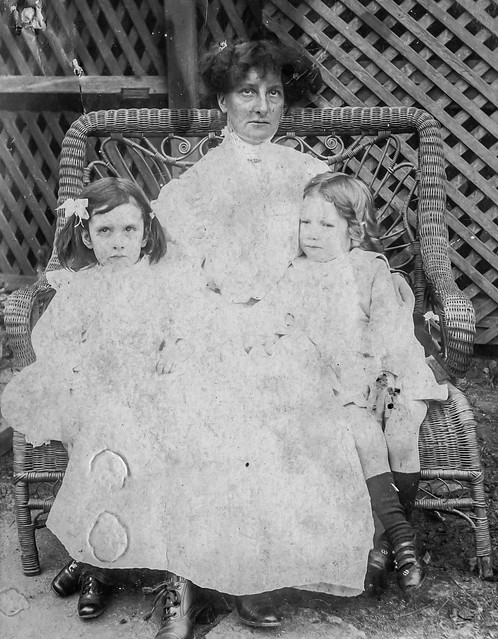
As we were talking, I showed Michael a photo of my Mother & Michael immediately stopped conversing (you could of heard a pin drop). Michael's "mouth hit the floor" - so to speak. He couldn't believe what he was seeing in a photograph. I didn't fully understand this moment until well after this visit. From that point on, Michael opened his arms to me & involved me into his life. 

Why did Michael involve me? What was this photograph of, that made Michael immediately stop?

Quite simply, 1 person of historical significance & a close cousin to Michael.
It was none other than : Lady Gregory (Augusta Persse).

Michael, had seen a newer version of "Lady Gregory" in the photograph of my Mother.
This is what stopped Michael in conversation. He couldn't believe it.

I'll let you be the judge (this was not the photo of what I showed Michael, but has the same effect).
This was my initial success to learning the problems of the "secret handshake" into the historical realm.


Read More
Posted in , , , , , , , , by Stories Of My Irish Families Monday, April 06, 2026 No comments

 56. The Document That Changed How I Research Family History (Washington - Newenham Letter)


This story has been mentioned quite a while ago. Back then, I didn't fully understand this letter to it's full potential. I just thought it was just a letter between a very world renowned person & my ancestor.

But sometimes in your Genealogical research, you come across something that you have no clue in understanding or you've spent so many hours on a certain part of research that keeps bringing up dead ends, you get frustrated as you know there should be more about the subject, in particular, with this document. You feel a bit "empty handed" to a point. But something inside you says either quit your losses or continue the research with a long road ahead, in hoping for some small sort of reward.
Inevitably & chances are more likely, that your curiosity is going to get you & you're going to keep researching. If you're a true Genealogist / Researcher, you will do this!

A copy of this historical letter, sat on my Great Aunt's wall for many years & it intrigued me to ask on why she had a letter from George Washington on her wall, as far as I knew, we had nothing to do with Washington. Well, after 20 years of first seeing this letter, now I know why it's on her wall.


This document, sat within my Maternal family till around mid 1930's, where a set of tragic circumstances forced it's sale at a Christie's Auction for just £70. It was written by George Washington, who had just been newly sworn in as 1st President of the United States.
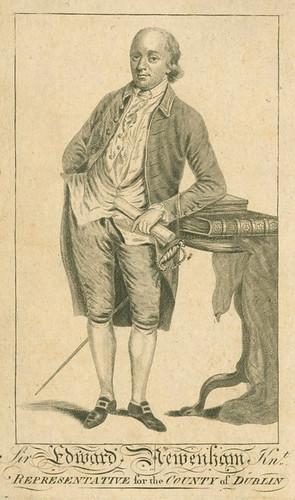
He was writing to my Ancestor - Sir Edward Newenham & it was dated July 29th 1789.

It was an introduction letter, to acquaint my Ancestor, with the presence of Janet Livingston Montgomery - the Widow of a fallen Revolutionary War hero - Gen. Richard Montgomery, who died 14 odd years earlier, at the Battle of Quebec City in late December 1775.
Richard's story is depicted in depth, via the Ken Burns TV Series "The American Revolution".
And if you know your history well enough, Janet's Brother, administered the "Oath" for Washington's Inauguration. Close circles huh!!

This letter came about, where early in 1789, Janet was getting ready to visit Richard's Sister - Sarah  (Lady Ranelagh) in the coming months, to pay homage, to Richard's extended Family.
And Washington wanted Newenham (his Irish Supporter of American Liberties), to become part of this visit, well that's initially what I thought.
Much deeper research, unearthed the facts where Janet was actually the instigator/initiator of this letter, not Washington as first thought. Janet compelled Washington to write it, as she visited him at the President's residence based in NYC many times. Janet was a very driven woman & Washington must of thought it meant a great deal to her cause, but also the American political/diplomatic cause.
The actual spot where this letter was written, was placed at the exact area of one of the footings of the Brooklyn Bridge (Located at Dover Street & Pearl Street). The only thing that remains as to what was there, is a very small plaque mounted into the footing.


This story only bore fruit, in the last year of research, that is, just over 10 years went in finding the story & it was only in the last year it all came together. I found all these interesting avenues of facts, that I couldn't find before, that the research went a bit pear shaped & took another life of it's own.
Felt like I had "chased the rabbit down many holes".


My research changed, when I found, by chance, a document written by Eugene Coyle who wrote a small but detailed story, documenting Montgomery's life. It was a holy grail moment to my research & gave a 2nd perspective of exactly what I was looking for. I read it twice & still couldn't believe what I'd found. It backed up the story that I had imagined in my head, but it also quoted this exact letters existence, it also listed who carried the letter. Eugene's research was in 2 parts.

The first part centred on General Richard Montgomery, his Life, Military, Death & Janet his widow.
The second part, ironically centred on my Ancestor - Newenham & his involvement with Richard's story.
Eugene was detailed in the shortest way possible. But from my perspective, I noticed a quirky thing, Newenham's story was also detailed enough, where I felt Eugene believed that Newenham's connective story to Montgomery, was very well warranted. I even got the feeling that Newenham's story almost overshadowed Montgomery's, because how descriptive Eugene was. He even went into Newenham's political mantra, where Newenham was indeed, a bit too radical on somethings, particularly in his later years. 


Here, Coyle depicts quite the story, but also highlights "Letters of Introduction".
Though, also highlights the end of the trip, didn't end in an amicable way for each other. Such the tensions of the time.

This information was just icing on the cake. It helped authenticate many of my thoughts & questions, that I had on Newenham.
Eugene's research, put this letter into a new light, also showing it was an extremely important to diplomacy, between America & Ireland at that time.

This letter is also highlighted on the "Founders Online" Website : 
https://founders.archives.gov/documents/Washington/05-03-02-0199


Read More
Posted in , , , , , by Stories Of My Irish Families Monday, April 06, 2026 No comments

Wednesday, 13 September 2023

55. Washington, The Mad King (George III) & Newenham - Part II

As per the previous post that had ties to "Hamilton" the musical, new information or should I say a new perspective, has been found, about Sir Edward Newenham's dealings in Politics. Many of these blogs have very similar tie-ins to each other, but with Newenham & his vast communications, whilst the blog post may sound the same, they have different aspects or different points of view to them.

On many occasions, that I researched in the past few years, I just couldn't find the story on why Newenham was the way he was. He was chanting & raving on one hand, but quite the opposite on the other hand.
"Hamilton" the musical, helped visualise the dealings with people at that time. In particular, the "Mad King" George III & the way he dealt with the American Independence (Separation from England).

Newenham was part of the political "Irish Patriot Party" culture of the mid to late 1700's.
At first, I didn't understand the Party's mantra, but it is explained easily by "wikipedia" :

 "primarily supportive of Whig concepts of personal liberty combined with an Irish identity that rejected full independence, but advocated strong self-government within the British Empire".

James Kelly's book on Newenham & various sources easily attainable, show that Newenham was going a little bit more than just "wanting Ireland to self govern under English rule". He was advocating instances of wanting to separate England & Ireland, in a somewhat political way. But in understanding this, Newenham was a bit more vocal about it, in particular with total separation, than his Patriot Party was willing to go along with, particularly from the very late 1770s & 1780's on.
It was here I understood, that Newenham most possibly was in the wrong Political Party, because Grattan & Flood, were all about "Irish identity" & did not take the view of becoming fully independent from England, they seemed to quash any sort of full independent talks  - it was only done in a political/legislative way.
Newenham was quite outspoken & went a bit further outside his Party's mantra, whereby it seems that he was the only one doing the talking, some felt he was "silly" when he spoke outside his party's views. I felt that he had become separated from his fellow party members, because no-one backed him up or atleast showed interest in it. His party stood their ground & Newenham his. As I noted in the previous post, this type of rhetoric was picked by John Adams & Marquis Lafayette, who made commentary on Newenham's motives. James Kelly highlights that Lafayette did offer a base of substance by saying that King George's "tyrannical" ruling did offer such a response from Newenham's views, but the Irish revolution for Independency "was not ripe" to be had. The irony of Lafayette's wording, was just a few years before, the events of '98.

It was around the time of 1780-1783, that I believe the "knight in shining amour" had arrived & inspired a vision for Newenham.
It was George Washington - Chief Commander of the Continental Army & his big white valiant horse named "Independence".

Newenham was all over George, like a rock band groupie of the 1960's. He wrote very spirited letters of gratitude / daily life / farming & poetry aimed at England's woes & America's rising up to be a superpower. When Washington responded to Newenham's letters, Newenham glowed like nuclear reactor on high, with nothing but admiration for the General. I suppose, "puppy love" at it's foremost part.

It was when I saw this style of friendship form, along with other Founding Fathers of America, I had seen a shift in how the British saw Newenham, on a personal level & political level.
Case in point, those who know the "Benedict Arnold / Major Peter Andre" affair, would also understand how the British would see an Irish MP who, communicates with American Founding Fathers showering them with glowing admiration, along with motives to separate Ireland from England.
As in the previous post, I noted that the Duke of Rutland noticed Newenham conversing with the Founding Fathers, in what could be claimed as "treasonous behaviour" against England. That is, "treasonous" being said from the English side, not the Irish. Rutland noted Newenham's correspondence & fowarded his views to William Pitt (Prime Minister). Pitt then told King George III & they placed Newenham on a watch list.

Newenham had also personally written to King George III & also was very vocal about when King George was "going mad", that a Prince Regent should be appointed in Ireland, whereby it would be in Ireland's favour to do so.

Next post will be about the Washington Letter to Newenham, discussing the "Montgomery Introduction" & the letter's ramifications 150-200 years later.
It's taken 10 years to get a story out of this 1 piece of paper & I feel that I've finally got to the deep core, of how this letter came about. The last few months has opened quite the deep story, something that I did not expect to find. Literally blew my mind.


Read More
Posted in , , , , , , , by Stories Of My Irish Families Wednesday, September 13, 2023 No comments

Friday, 10 June 2022

Hamilton The Musical & Newenham
"Not throwing away my shot" & "Washington on your side"

A recent visit to see the hit musical "Hamilton", has re-invigorated a lot of thoughts, with historical documents via relative Sir Edward Newenham & some of the stories that relate to the Found Fathers of America.
It's not so much about Hamilton himself that set it off, but it's the way the songs were written & portrayed in the Musical. I got lost in a few songs, because my historical research with my somewhat "politically controversial" relative - Sir Edward Newenham, he had a lot of similarities of the time, to that of Alexander Hamilton's story.

The lyrics of the songs, opened up a plethora of feelings, thoughts & most of all "visions", on how to perceive the events unfolding in the newly Independent America. Comparing Hamilton's story, to that of Newenham, gives a good insight, into how the inner sanctum of politics & war worked with the Leaders of America, is. Even though you could say - "Hamilton" is not 100% accurate to base off, it still did carry the story the narrative of my thoughts. Certain things in the musical didn't fit with how the songs were to be played out, so some slight lyric adjustments were made to fit with the vibe of the story.

But, it also keyed a thought that I had never entertained - Did Hamilton ever communicate with or by chance know of Newenham?
  
In the short, there hasn't been any documentation found to date, to suggest that Hamilton & Newenham had any form of communication between them.
However, with the circles of communication & including the people in "the room where it happens", there is every chance that Hamilton may have come across the name or character of Newenham, but most possibly by verbal form only.

My reason is that there is so much communication between Franklin, Washington, Adams & Lafayette, including others, who all knew of Newenham, and would have discussed Irish affairs at some point in their meetings, with the context of how hard the Irish Nation had suffered under England's tight grip. In particular, in the scenarios that are played out in the "Founders Online" Archive, many letters written by the circle of Founding Fathers did not mention Newenham directly in regards to Hamilton.
But he is mentioned or referenced in footnotes, concerning that particular article (the footnote usually references a letter between Newenham & Washington or Franklin, to give concept to that article).

Not knowing much of Hamilton, my initial introduction to Hamilton, was a couple of years ago, when I listened to a podcast called "Presidencies of The United States" by Jerry Landry. He draws on his own interpretation of Hamilton and how he fits in with the narrative. Part of his podcasts went over the "Reynolds Affair", where for me, it got interesting.
In particular to the extortion part & how Hamilton procured funds to pay off James Reynolds is just too intriguing. It opened a plethora of thoughts, about how he got into that mess or more so, how he tried to get out of it.
And because of this part, I was so intrigued by how a Musical, could portray this scene. Would it be very factual, somewhat factual, or just be a very loose dramatisation of the events. I was happy with the way it was portrayed, as it helped visualise, Jerry Landry's depiction of the events. And from what I know, Newenham didn't have a "Reynolds" story either.
  
About 1-2 weeks after seeing the musical, I could not get some of the songs out of my head. They were very catchy tunes. So catchy, they sit in your head for days, even weeks. 
For me, what sold it, was in the 3 songs from George III (The Mad King).
The lyrics in "You'll Be Back", show that George III is telling the Founding Fathers, that you may not come back now, but eventually you will come back to me - because "You belong to me".
And if you don’t - "I will send a fully armed Battalion, to remind you of my love" & "I will kill your Friends & Family, to remind you of my love".
It highlights, pure quintessential childish "madness" - where a person doesn't get their way, they will hurt or kill everyone.

Information within James Kelly's book on Newenham, shows that Newenham was subjected to a similar circumstance.
It is noted that Duke of Rutland, had suspicions of Newenham's "extensive foreign correspondence" with the newly separated American "Founding Fathers". Rutland briefed William Pitt (Prime Minister). Pitt, then discussed it with George III, that Newenham was entangled with a plan, to get Ireland to follow suit of America, with becoming Independent from the Monarchy. That sent George into a tizzy, where he placed Newenham on a "Watch List". But it seems as time went on, the evidence against Newenham, became less & less, and Ministers realised it wasn't really what they thought it was. They realised Newenham wasn't of importance anymore, so they dropped him off the list.
But needless to say, this "Watch List", I wonder what the outcome would have been for Newenham if George III or Pitt took it any further?
 
Newenham was a true "fanboi" of Washington. And Washington was very fond of his Irish friend.
Washington even made the friendly implication to Newenham "Hey buddy, you can stay at my house & we can play".
If fate had its way, my 4th Great Grandfather should have been an American, under this letter's ideals.
Another Hamilton song lyric sits exactly here "It must be nice..It must be nice...to have Washington on your side". Never a truer word said here, that indeed, Washington was on his side - for many years.

Newenham was so besotted with the idea of becoming independent from England & his greatest idol - Washington, actually managed to get the job done. It became almost like a Painting on Steroids for Newenham. Picasso or a Warhol maybe?

But for some reason, Newenham followed this dream alone. His Party seemed to have held back from Newenham's commentary. From what I can make of it, Newenham didn't have the backing from others, with his ideals of separating Ireland from England. But as Lafayette colloquially put it to Washington, Newenham's voice was just "Parliamentary Barking". John Adams had a taste of Newenham's words too, but I found it confusing to interpret in which manner he meant it. Adams noted it as "Foundations of another Revolution".
I don't know if Adams, was supporting Newenham's notion for it or critiquing the comment, to say that Newenham is stirring things up so much, that it's quite dangerous for 1 person to pursue?

Like Hamilton, Newenham had 3 documented "quarrel ending" Duels. But it is unsure if there were any more.
2nd Jan 1774 saw the first duel with Benjamin Geale - ironically held near church grounds in Dublin. James Napper Tandy was Newenham's "second".
Just 6 weeks later, Newenham still steaming after Geale's encounter, seemed very irate at Sheriff John Tucker & went a pistoling again. Pistols fired & the shots missed (unknown if intentional or not), Newenham was still so pissed, that he drew his sword, but no one was injured from this fracas. 
1778 saw the 3rd Duel, with John Beresford (Beresford challenged Newenham). Shots were fired & Newenham came away alive, but with a grazed leg.

Did Newenham “throw away his shot”. Hard to interpret the details, but I think from the 2nd & 3rd encounter, I think the aim was much "tighter" than the first.
With all these Duels happening, it was well after my lineage was born, so if Newenham was mortally wounded in the same circumstance as Hamilton, we would have still survived.
Newenham even lamented his Dueling days with Washington, by saying "Public Meetings & Private Duels have much injured my bones & frame". At the time he was writing this letter, it seems he was a little bit drunk. He was drinking Claret & toasting to Washington & became very sentimental, about the fact that he wished to visit Mount Vernon, for him to be in pure happiness.
Mount Vernon seemed to soothe Newenham's pain, from life. His eternal nirvana I think.

I think there is still more to discover with the communication between Newenham & the Founding Fathers, that this blog is just a "taster", to what still lies undiscovered. And this blog may be updated at a later date, where extra details exist.
Read More
Posted in , , , , , , by Stories Of My Irish Families Friday, June 10, 2022 No comments

Thursday, 16 January 2020

53. Lost Lineage - In Far West Cork 

(UPDATE - September 2023)
*There is now, more weight towards the Gosnells name, to the below story, as more & more people get tested. A lot of close related testers have come up in the past 2 years, since this was blog was written.
But it still has not given me a definitive surname, only an area to concentrate from.
Some really close testers are even from Australia, which has thrown me a bit of a curve ball on how we relate, but their trees cannot go back to this area or have only tested for a bit of fun & or not willing to participate in deeper research.
(Schull/Durrus/Ballydehob/Bantry is the most definitely the hotbed of the DNA testing area)*

About a year ago, I discovered some pretty interesting results on my Ancestry DNA kit.
When the results came in, it showed a bit more detail than FTDNA.

Initially, I didn't understand how the matching system worked, so it took quite a bit of time to interpret the results as compared to FTDNA. It was around this time, I learned on how to use the "Shared Matches" tool.
Pretty soon, I was then able to place a bunch of interlinking matches, to form a grouping of people and then balance their matches and see how or they share a common area of living between 1700-1850. This is where I found, on how to get a better - more confident hypothesis, in to forming groups to their certain areas and how I relate to that group.
The method is not to relate to an individual DNA match as such and keeping them as an individual, but relate to an "Individual in group of matches and then place that group, to an area". This is key to unlocking the mystery.
This was so powerful, once I learnt how to identify a group, then to identify a place of that group and somewhat eliminate the or prove a lineage to that area. Part of this method was used below, to find a strong enough genetical story to Far West Cork, but it was not known who the exact ancestor was, but rather, a very good indication of the lineage. This is a complex story and as I am writing this, I believe now, there maybe more than 1 ancestor to this story.

So I picked up yet another story showing, that my genetics linked back to Far West Cork. I have been chasing this story for quite a long time.
The areas in particular, are to the Schull / Ballydehob and Skibbereen districts. A handful of matches were showing up with around 30cM's, with Irish ancestry and that were also themselves born in Ireland.

This grouping of DNA matches, could show Far West Cork in their Family Tree's and they kept intertwining with the same group of people.
I was kinda flabbergasted and excited all at the same time, to identify why DNA was picking this up. As I had no idea how I could be connected, or why I was being genetically matched to this group of people. There was no written or verbal family knowledge, to these areas, to form a hypothesis.

It took about 6 months to compile a hypothesis, that someone on my Father's lineages, had a very close-ish family member, that migrated to Australia and had very close ties with families in Far West Cork. The other quirky thing, was that it kept coming up with a French Huguenot flavour.
This is where I started to realise that there was no close name connection, to all of this.
With the amount of close matches and distanced matches, it was totally evident that I could put a place to this story, but no surname stoodout, to help define what lineage it was.
It also supported a thought, that could there have been a name change, due to the fact that DNA linked myself and my Father to a place in Ireland, during a certain time period, but couldn't identify a name. This frustrated me a little, because I could not line the DNA with a known family tree

However, what didn't make sense either, is that I kept running into very weird instances with the Gallagher/Sheehan and Minihane (+ it's variants - Moynihan/Minighan etc) names to this exact area.
These 3 names sit in my Family Tree, however none of my Cork families, matched the areas that the DNA was depicting.

So, then I decided to dig in to written historical references, to see if DNA and history said the same thing. I was trying to add weight to one side of that "see-saw" hypothesis, to help give a better interpretation.Even though DNA doesn't lie, I wanted to make sure, that History and DNA spoke the same language.  It took a few months to find somewhat of evidence, that how history matched the names and grouping of DNA matches to my kit. It had a high probability of matching myself, on what was written about with Far West Cork history - to around the late 1600's and early 1700's. It also included some very strong references, to refugees from a political/religious point of view. These refugee's, were the French Huguenot's. However, I am also being open minded that there could have an intertwined German Palatinate story as well.

So, with this in mind, it was highly probable that this was my Paternal side of things, as nothing really matched my Mother. So, I hedged my bets and I asked my Father to help with my research, that is, to take an Ancestry DNA test. So, Ancestry test was done, submitted and the results are now in.

On a side note, My Father has done testing via FTDNA and after learning what I have, it shows the exact same story to Far West Cork. Though, I am finding it more difficult to user FTDNA's interface to determine groups of people, it takes almost twice the time than an Ancestry kit. After finding this story, I then used my FTDNA kit to see if that could elude to the same story. And it showed what I wanted to know, however the interpretation was much more difficult, as compared to Ancestry's matching system.

So, having been armed with a prior hypothesis with 2 FTDNA kits and 1 Ancestry kit, I put my Father's Ancestry Kit to the test. Could 1 generation closer to Ireland, bring us a better / stronger story.
The current answer is : Yes, it does show better detail to certain areas
The image below depicts the difference of 1 Generation. Of how an Ancestry kit defines it.
My Kit is on the left and my Father's on the right.
Notice the more defined groups of communities that are formed with my Father's kit.
However, South West Munster segment, did not break down to the Far West Cork community


So the current hypothesis to Far West Cork, is as follows :
  • It is still not fully understood, which side of my Father's Parents, this story comes from. As some names link to his Maternal line and some of his Paternal line. I am being open minded as well, as that it could be both sides? Due to the fact of DNA telling a striking story to South Western Ireland.
  • Names that link in with our genetics to Schull / Ballydehob or Skibbereen districts :Copithorne, Dukelow, Swanton, Young, Shannon, Wholehan (+ variants), Camier, Kingston, maybe Gosnell(s), maybe Woulfe (Wolf?) and a Lefevre
  • Names that sit in my Family Tree, that may possibly intersect with this story :Sheehan, Ambrose, Godson, Bennett, Fitzgerald, Lynch, Casey, Lucey, Morgan, Collins, Minighan (+ variants), Gallagher.

DNA Match Area

But the recent weeks of real deep research (and elimination), I believe now there maybe a link to the Godson or Ambrose name. Most possibly from my Male Fitzgerald immigrant's Mother - Catherine Godson or his even his wife - Elizabeth Ambrose.

The Godson name does seem to have a name change to a Godsell in what we know of, or that has been researched. However, the lineage goes from Cork back in time to Limerick and not 100% sure if it's correct. But we know 100%, Catherine was in the RC "South Parish" Church of Cork City, by 1807-1810.

The Ambrose name hasn't been placed to an area, other than Co. Cork.
Documentation shows Elizabeth Ambrose, married Thomas Fitzgerald in 1837, in the "Diocese of Cork & Ross". There has been no documentation found, to identify or support the actual parish where they got married, but it had to be of COI/Protestant nature, because Thomas and Elizabeth came to Australia in 1840 and were listed on the shipping document as Protestant.

So at the moment, I am deciding to side with the Godson name, due to the fact that a link to an actual DNA Gosnell's surname and connections via that name, is more compounding than any other hypothesis. This name, is the only piece of the puzzle that fits inline with the DNA matches to South West / Far West Cork.
Read More
by Stories Of My Irish Families Thursday, January 16, 2020 No comments

Saturday, 2 November 2019

52. Ancestors...What have you done?

Recent discovery of my all male line, could now have uncovered quite an interesting tale.
For me, it's turned history, a little on it's head.
See, I'm a Fitzgerald (with a little "g") and my genetic research of the past 6 years, is wanting to see what is my Fitzgerald story. Where ever it lands, is where ever it lands. But my hypothesis lands that we maybe off a derivative Fitzgerald line via the Desmond's.
The areas of Cork, Limerick and Kerry, are most definitely on the genetic radar.

However, in the past 10 years of normal research, I am very conscious that there are 2 sides of the story, that sits in Ireland. Does my surname bear with it, a British flavour or is it truly an Irish one. I've learnt with reading history, you can't really be both / in the middle or bi-partisan, you're either on one or the other.

Being a Fitzgerald, from a genetic point of view, is brain numbing. Simply because there were many branches, playing "dynasty" with each other. Now as history puts it, it has shown quite the mixing with the local Irish. Hence where the term came from "more Irish than the Irish".

From our own research, we share in a Cork City residence around the year of 1800, with great confidence. We are of the South Parish - St Finbarr's Church (RC). And apparently lived in Dunbar St. Two other known Paternal families (that later settled in QLD & NSW Australia), were also identified as being from the same Church (Lynch's & Sheehan's).

My Male Irish Immigrant Fitzgerald - Thomas , shows an 1810 record, on where he was baptised (South Parish Church), with the Father being William & Mother Catherine (nee Godson).
Catherine's surname - Godson, has the potential to be of a derivative of a similar name.
My Fitzgerald's - Thomas & Elizabeth (nee Ambrose), were married in  1837, under the "Cork & Ross Diocese". There is no placement or church to depict where they got married, but Thomas somehow transited over from RC, to being of the Protestant religion, as it was noted on the Immigration paperwork, when they arrived in Sydney, Australia in 1840.
They emigrated from Cork around early 1840 and wound up in Sydney, Australia at the very end of 1840. Thomas arrived as a "wheelwright" and also noted as a Carpenter, so the potential thought was to find if he had family history of woodworking or by having a trade vs being a farm laborer or land owner. Thomas was never found to have an estate or being a land owner in Ireland.

Using Thomas as a base, and his known Father being William of Cork City, it is highly suggested that William's Father was a Maurice. This Maurice is quite difficult to track down, as his timeline is hard to match up with other known Maurice's of Co. Cork & Cork City.
So I'm hoping that we can get a story to see which Maurice - our putative Maurice is.

Using the Y-DNA, it highlights on a dominant connection with the Fitzgibbon name.
It also highlights a 3 matches show "more than" 95% chance, that the link may lay around 15-17 Generations back. Possibly 17-19 maybe the better answer?
The thing is, we have no known Fitzgibbon ancestry, that we know of.

Now this is where it gets a bit tricky and interpretation is still quite open, on how to view the below, but I'm being very open minded to all points of view.
Somehow, we now also share a connection, to around same generational era of the Fitzgibbon's, to a very well documented English name of Gookin.
I had no clue what this meant initially, but further in-depth research, found that the Gookin name appeared in Co. Cork  / Cork City around the 1600-1610 era.
With further research, it was found that this name was connected via 2 men - Sir Vincent Gookin of Courtmacsherry Co. Cork and Daniel Gookin of Carrigaline Castle Co. Cork.
It is understood that this lineage of Gookin's, descended from Ripple Court in Kent, England.
And they were placed in Cork during a later "Elizabethan plantation period" of Munster at around the first few years of 1600.

Genetics have shown that the one (1) Gookin named match, is very slightly closer to myself (in percentage of relatedness), than the two (2) Fitzgibbon named matches. Even though, these 3 close matches share the same GD (Genetic Distance) of 6 to myself.

It is not known how we all connect or even indeed why we connect, but there will be some sort of back story here somewheres, that I believe may not be a happy outcome. But current genetic information and the interpretation of it, has placed my Fitzgerald name in some form of small population group, that deals with the period of 1600AD and most possibly of Cork City or very close surroundings of the city.

It can't tell me why just yet, but I have the feeling that this era, shows a scattering of this group after this 1600 period. This story, has the potential to prelude or indeed, include the Cromwell period as well. Current genetics, cannot tell me of exactness just yet, but the base of information certainly puts your mind in that train of thought. Particularly when you know what happens in Ireland, during the era from 1580-1610.

And to point out all of this, with a plausible twist of fate, if the above does become true and my name is linked to the Gookin story with the Fitzgibbon's, it has the potential of revealing a true reality of this harsh past. When researching this era, not many stories end in a "happy ending" for all.

It is not known which Gookin man connects to us - Sir Vincent or Daniel.
But Daniel Gookin took hold of Carrigaline Castle and I think he was the 2nd or 3rd owner of the Castle since it was taken in possession by Elizabethan forces. The Castle was held by the Fitzgerald's (Earls of Desmond).
Now just 3km's East of this Castle, was the property of "Coolmore", which was at that time, in the hands of the Newenham's. This Coolmore property, is of my Maternal Newenham family line.
It's very difficult to grasp how a story linked to around the 1600 era, could show a plausible Paternal story - living just 3km's away from my Maternal family.

Now, genetics have shown, that my Father and Mother are not related. However, there is, quite a multiple of small segments of DNA, that do show that something is there, but it is below 4cM's.
So in a genealogical sense, they are not related. But most certainly, I do believe somewhere in Cork, my Paternal line had great potential to cross paths with my Maternal family, whether in business deals or whatever.
On a last note, with very recent genetic information, I am challenging the hypothesis that my Paternal Grandparents may have had Fitzgerald connections in Co. Kerry. Killorglin and Killiney are places of my Paternal Grandmother's ancestral homes. Her families had contact with other very close related families of the Fitzgerald's, in particular around the eastern edge of the Tralee township and on the Dingle Coast.

You couldn't script this, even if you tried.


Read More
by Stories Of My Irish Families Saturday, November 02, 2019 No comments

Sunday, 20 October 2019

Splitting the Humphries/Hume Lineage (Family Tree / DNA)  *Updated 17-FEB-2020

Well, DNA has finally started to show something - really something. And it's exploding.

On my Father's Maternal side, we descend down from a South Western English "Humphries" family and an Irish Co. Kerry "Hume" family.

This story is based from Thomas Gregory Humphries & Sara Susannah Hume
Thomas and Sara are my 2 x Great Grandparents and they were based in the South side of Sydney.

Thomas was born in Westbury-On-Trym, Gloucestershire in 1856. Possibly in Clifton itself.
In today's standards, Westbury-On-Trym is classified as a part of the City of Bristol, but back in the days of the mid 1800's, I think it was known as Gloucester(shire).
Thomas migrated to Sydney, Australia between 1871 and 1881.

Sara was born in Sydney in 1862, to Irish born Parents - John Hume and Susan Hickson (aka Susanna/Susannah). John was from Killiney, Co Kerry and Susan was from Killorglin, Co. Kerry.

Susan Hickson arrived in Australia on 8th of June 1853, she was 22 years old and was on the Immigrant vessel "Australia". It was technically on the later side of the Earl Grey Scheme, but was of the same premise, a scheme that allowed young Irish girls to survive in another country and her travels to Australia, was from the ramifications of the great famine.
John came to Australia in 1855, he was 30 years old and was on the Immigrant vessel "Golden Era".
In an interesting case, Susan was noted on John's Immigrant Form, as the "Sponsor" for him and the form listed John as a cousin to Susan. (*Note: No proof yet as being actual cousins, but being open minded about it). Susan actually paid £5, for John's emigration to Australia.
John has been noted, to be a part of the RIC (Royal Irish Constabulary) in Ireland. It is also noted that documentation shows, John Hume was in contact or known to Magistrate/J.P named Hickson.
When John arrived in Sydney, I believe that he may have had a job lined up as Policeman, which  may have been organised via Susan. However, this is not proven yet, but a strong hypothesis exists.

Susan Hickson is a daughter of Richard Hickson and Mary Ann Carter from Killorglin (For more details, the Hickson's are very well referenced here in this blog : Here & Here)

So, combining those details, with DNA, we get the following :

** As a note to this story, early genetic research into this link, shows an equal sided story, but as time went on (in the last 3-4 months), it has shown that DNA is showing a very very strong link to Co. Kerry. A very overwhelming story. Genetics so far, has now shown a base of around 80-90% Co Kerry to 10-20% Gloucestershire **

10 months ago, a multitude of DNA matches started appearing, via Ancestry and FTDNA.
In that time, an unknown close cousin appeared on GEDMatch, but then I found the same match on FTDNA. The close cousin matched myself, my Father and my Aunt. But it also matched a good bunch of matches related to this Humphries/Hume family tree.  Lets call this new match "H-H"

It was here, where I discovered how the matching on Ancestry worked, simply by how each match "related" to H-H and to others in the group of matches. It was here I seen a pattern.
The pattern included a consistent Southern English or Irish Co. Kerry placements of matches.
Another pattern was different in other DNA matches, because they were descendants off the Humphries-Hume marriage (A combined English/Irish)

  • Group 1 - Irish links to Co. Kerry (Killorglin/Killiney as a base)
  • Group 2 - English links to South West England (Gloucestershire as a base)
  • Group 3 - Both English and Irish (Combined DNA from the Humphries / Hume marriage)
The chart, is to show how I split my Australian Humphries/Hume marriage into it's DNA prospective.
This is based on matches via Ancestry (about 4 months ago). It is a chart made up of multiple groups and putting them all together.
(I have blurred out the names for privacy reasons)


Now using the above 3 groups, this is where H-H comes in. Contact was made with H-H and it was found that they shared an adoptee story. DNA was their only way of knowing where they come from.
So here's me, working out how we are related to H-H and the story gets harder, because there is an adoption in the works. Ohh boy, this is going to get complicated.....
After a few weeks of working with H-H's DNA matches, it kept hitting the same thing.

H-H was heavily linked with a majority of Group 3 matches and the DNA shared (cM's) between my 3 kits. It suggested that H-H was most possibly a descendant from the Humphries / Hume marriage.
To confirm it beyond reasonable doubt, a 2nd Cousin to myself, who shared the Humphries / Hume lineage, also matched H-H.

Having established this Group 3 story, I then played off H-H's story, between Groups 1 & 2, to identify what area was dominant to their story (and thus help me to identify either English or Irish).
I used a GEDMatch feature, to help assist in a story, on which group H-H matched more than the other. GEDMatch showed that H-H had a majority of an Irish connections, that had very high % of being placed to Co. Kerry.
To again, prove beyond doubt, everytime I used a Group 2 match, there was no DNA shared or implied upon. I tested this over a multitude of matches to rule this story - in or out.

I then went back to Ancestry again and rechecked the shared matches, to see if there was any other underlying story, that I hadn't picked up. 3 other matches came up, all had tie ins with Group 1 matches and never matched anyone from Group 2.

Surnames that seem to tie into this story are : Blennerhassett, Talbot, O'Neill, Enright, Hickson, Groves, McElligot and Peevers. The Co. Kerry Enright name, is possibly connected to the Sydney Enright's (Sydney Enright's share DNA under the Hume/Humphries group of matches).
3 pockets of areas that were apparent with the above surnames: Dingle Peninsula, Listowel and Tralee (Eastern Side of the Township within 3-5 Km's).

A recent discovery has come to light, in the past week (Jan 2020). A DNA tester with the surname Huggard has appeared on my Father's kit - distant, but it's there. This tester is also associated with the Kerry Hickson/Hume story - They share a match (surname Neill) that is also based in the Co. Kerry grouping.
It sheds light and adds weight, that Richard Hickson (of Killorglin) is the son of Charles Hickson and Anne Huggard (albeit, this is a very strong hypothesis via DNA results). A few people that have trees, also show this connection as well. However, the Huggard name, seems to have also intermingled with various generations, and has now added a twist of which line the Huggard name is coming through.

(*) A few days ago, I had enough confidence to update my Ancestry "Tree", to reflect this newly founded Charles Hickson / Anne Huggard marriage. I wanted to see if "Thrulines" would give me an indication if it was indeed somewhat correct. Even though it's still just an indication at the moment, "Thrulines" does show enough of a connection via Anne Hickson - daughter of Charles & Anne.

Anne Hickson - sibling of my Richard, has indeed shown 14 descendants having DNA matching my Father and partly myself (as of 17th Feb), to show that the connection is most likely valid, between Charles Hickson & Anne Huggard. Majority of these matches can also show a Kerry connection, minimising the error rate of "Names to Places".


Now, the Tralee connection has very strong ties to the Blennerhassett family of Gortatlea, Ballyseedy.
The direct name of Blennerhassett is not a DNA match to myself as such, but a multitude of these interconnected matches, share a link or can show a family tree linking to Arthur Blennerhassett and Emily Williams. Why we are connecting to these 2 people, I don't know as of yet.
The places that these matches link to, is Gortatlea / BallyMcElligot, Ballyseedy and very recent discovery (Nov 19), was found at Poulawaddra (Peevers surname).
Here is a page with valuable info, regarding the family of the Blennerhassett's. It is where I am trying to identify what the connection maybe. The Gortatlea / BallyMcElligott PDF highlights Arthur Blennerhassett & Emily Williams.
Reading into this story, there is an involvement of this lineage having "Farmlands" in the town of Killiney. This is very close to the John Hume story I know of (as above) and wonder if there was a marriage/entanglement of a Blennerhassett through John's family instead of the Hickson line?
This whole story, is connected to the Group 1 DNA Matches and that also ties in with H-H's story.

So, to take it to another level and make matters a little more confusing, a Blennerhassett named DNA match, shares a link to my Paternal side (via my Aunt's DNA kit). 3 x DNA matches who are very closely related to my 1st Gen "Australian Born" Fitzgerald, also link with this Blennerhassett story. Hinting that there maybe some sort of Paternal Fitzgerald link, to this family of the Blennerhassett's.

History of the Blennerhassett's, show they were granted / settled on and mixed in with the Fitzgerald Lands of Co. Kerry, via ramifications of the Elizabethan Plantation era (post 1580).
This Fitzgerald lineage, is of my understanding, to be of the Dingle Knight lineage.
DNA via Ancestry, has only shown a dominance to my Paternal Fitzgerald's via Cork connections, not Kerry as yet. However, I'm keeping an open mind about it.

The other quirky thing is, there are some hints of genetic mixing of Blennerhassett "Palatinate" names with my DNA. The "German Palatinate" story, includes a group of people who were religiously persecuted around the 1700's and they were forced, to leave their country and settle where they were allowed to - usually in an area that was more predominantly based with Protestant's.
The surname "Switzer" has an interesting tie to this story. However, Miller and Myer are 2 really dominant names that myself and my Father share, but I haven't found a link to this Co. Kerry story.

This is where I'm up to, at the moment. It is probably why I show up on Ancestry's "Ethnicity" page, showing a Cork and Kerry dominant story. I knew about the Cork story, but not so much of the Kerry one. Very empowering.




Read More
by Stories Of My Irish Families Sunday, October 20, 2019 No comments

Wednesday, 12 June 2019

Atkinson's of Newry Co. Down Ireland - Ballarat, Victoria, Australia

For the past few months, I started to get a little more involved with my Maternal Grandmother's Atkinson family. See, my Grandmother (Dorothy Wendy) was born as an Atkinson.
Her Father - William Thomas, was alive when I was knowledgeable enough to know of him. However, after repeated calls to see him or atleast meet him, my Grandmother kept his life away from mine. At the time, I was bit disappointed of my Grandmother then and still am now. But I understand why she did it.

Around 1992, William passed away and was within a week or so of my Paternal Grandfather passing away too, so it made it all a bit more difficult to come to terms that I would never get to meet him.
The reason for my disappointment, was because my Grandmother never really spoke "why" she would never allow me to visit or see him. She kept a lot of "Family stuff" hidden away, never to be talked about (on both sides). I had to learn of the real reason, many years later from my Great Aunt. William apparently wasn't really wanting to know of other people or even talked a lot to his children. That's sort of the impression I got. If my Grandmother had of sat me down and explained it that "he's not the sorta guy you want to get to know" type of conversation, I would of have understood that maybe, somethings in Families just don't work. As I've grown older (and the colloquial wiser), I see it very clearly, that being a Family or indeed a closely-knit family that enjoys being together, is very hard to have these days. We are so very busy and diverse these days, that what was family life 50-60 years ago, has a different meaning today.

So with that in mind, I am rekindling a lost contact - The Atkinsons of Newry, Co. Down, Ireland.

After many years of delving into Family History, I had a tough time in researching this Atkinson family line, simply because I found it too hard to find correct information at a very close level.
If I get the close level stuff wrong, then the whole tree will be out and the potential for many many hours to be wasted, would be very difficult to get back.
I tried to use DNA, but I kept running into a lot of deadends, simply because I didn't have enough family names, to work out links or connections.
I lost interest a few years ago, because I was getting nowhere, that is, until I used a bit of willpower to understand these Atkinsons.

Probably my first fatal flaw, was to "assume", that my Atkinson lineage, was British. Indeed, it is, but something was different to my line. I couldn't pick it. They just didn't match where I wanted to match.
I had more connectivity to the British Atkinson name, via my Father's DNA, rather than my Mother's.
What the...... My hands went up in the air in frustration, had to walk away from the monitor before it got smashed - type of thing. It just kept coming up with deadends.
This is where I had to come back to basics, this is where I went to ground, with that lovely page called Trove and using the BDM in the State of Victoria (Birth's-Death's-Marriage's) to work out legitimate links that can be proven.

This was my "eureka" moment (pardon the pun). As I got more in depth, I realised that I had found a Geelong/Ballarat connection. Not long after that, I found out that these Atkinson's came over to Australia (as a large family), from Newry Co. Down Ireland. Directly after the Famine.
As soon as I found this connection to Newry, it blew my mind, as it wasn't what I had expected, I thought they had come from England, not Ireland.
Time went on and I found that my Grandmother, descended from an Arthur Atkinson with his wife Maria  Atkinson (nee Clough). Arthur was born in Newry Co. Down, but Maria was born Manchester England. Somehow, Maria ended up in Newry.
This Atkinson name, is of Northern Irish stock and from what I understand of it, to be a product of the "Planter Era" (1590's +), however I have no source to confirm this (yet). However, when you have a lot of Planter families and you know the history of 1590-1650 era, you would see what dark history it ties to. What I am trying to understand, how many generations does this Atkinson line, survive in Northern Ireland for (is it Pre 1650 or Post 1650).

Some of the details given by various documents (the Australian sources), has some parts either missing/covered over by tape and or had loose ages. So a lot of maths had to be involved.

Arthur was born in c.1810 in Newry Co. Down Ireland. Arthur and Maria were married in Newry Co. Down at a very young age.
Going by my maths, I can somewhat pinpoint, that Arthur and Maria were married around c.1829/1830.
Maria was approx 16 and Arthur was 20 going by Maria's Death Certificate. Arthur's Death Certificate shows he was 18 at the time of their marriage.

Straight away, they went on to have 13 children - before they moved to Australia, in a very important era - 1852.
From what I can ascertain, the children are as follows in Birth order as best as I can decipher : Richard, William, Arabella, Mary Anne, Peter, Sarah, Elizabeth, Marie Mary, Charlotte, James, Arthur, Joseph, Maria.
Of the 13 children, only 2 had died young in infancy - Richard and Peter. Most possibly buried in Newry. Richard's death details cannot be 100% confirmed, as some details are covered over by tape.
2 other's had died in early adulthood - Mary & Charlotte, in their early 20's in Australia.

They stayed in Newry Co. Down till 1852, where they all hopped on to a Boat and headed for Australia. I think they came here as Free Settlers. Arthur is noted as being a prospector/miner when they are located in the Ballarat district of Victoria.

A confusing part, is that on Arthur's Death Certificate (dated 1879), we find him spending 2 years in South Australia, then 27 years in Victoria (total of 29 years in Australia). Maria's Death Certificate (dated 1869), shows that she has been only in Victoria for 17 years - No South Australia?
Did Arthur go to South Australia after Maria's death or before?
The "maths" of both Death Certificates, show that 1852 is the the year they landed here in Australia, but Arthur shares a South Australian stint somewhere's.
On the shipping details of the family, it looks like Arthur came over to Australia on a different ship, as I can't see him on the manifest with the family. There is still a lot to find on this matter, due to the unknown South Australian "2 years". But as of yet, I haven't found that piece of information.

So, one of my questions that I mulled over sometime with, how does a large family survive the Famine and leave almost intact when the Famine is considered over?
One thing I can't find evidence of, is money. No evidence of any Castles or major land holdings either. So it starts to rule out a "well off family". Arthur's occupation listed on his Death Cert was a Gardener, no hints here there either.

Until I came across a document (2015 Famine Pamphlet), that showed a greater aspect of the answer, that I was looking for. It was marked as the Annual Commemoration to the Famine story - from the Newry, Mourne & Down Council. When you read on further, it shows an Arthur Atkinson, who was a tennant under the "Earl of Kilmorey" (Francis Jack Needham) ......This landlord seemed to do what ever they could, to help or assist the tennant staying on his lands during the famine. I suppose for obvious reasons, so that Lord Kilmorey didn't lose any rental income.
It has listed Arthur, of the townland "Ballynacraig" and it shows he emigrated to Australia, due to rent arrears.
More details on Lord Kilmorey Newry, Mourne & Down Council Webpage

Now it baffles the mind to think, in one of the historical atrocities that is known as the 1845-1849 Famine (The Great Hunger), a family of atleast 11 children, survive this 4-5 year period almost intact, they survive a boat trip to Australia and they don't own a lot of money. You could place a lot of their success of living to that point, from their landlord's attitude to keeping them on his lands.
Using this story, as against other Irish families that had wealth and lands (of Planter Stock), this is one of a few stories that intrigued me, as a large family survived the famine, as against many families that were wiped out by the effects of the famine (Bad Food / No Food / Thrown off lands / Rent Arrears / Poor Health / No Government Assistance except Workhouse / Selling good food back to England)

I am very fortunate to think that we could've been so easily wiped out.

Arthur Atkinson and his wife Maria, are now buried in the Ballarat Old Cemetery.
Their child, Charlotte is also in their grave.

GPS Coords  -           -37.546483°      143.849633°


Read More
by Stories Of My Irish Families Wednesday, June 12, 2019 No comments

Thursday, 10 January 2019

Dear Cousin Michael,

(Written over a few months)

On the 25th of June 2018, I had just gotten in to my workplace and settled into the flow of Monday Morning's work. I had just started talking to my Supervisor, on how to plan for the day's adventure. Half way though our discussion, about 8am, I had received a message, from a friend that revealed some very sad news. It was to inform me, of the day you died.

As I read the message, my heart and stomach sank. My supervisor was still talking to me, but I wasn't quite listening. My mind went completely haywire, thoughts of our recently made plans to meet up and discuss matters, completely dissipated into thin air. I was lost into a daze for about a minute.

I came back down to earth, with my boss still talking and then waited for his pause. I interjected that I had received some sad news of a death of a relative. Wasn't quite in the mind to absorb a days work instructions, all at that moment. But pulled myself together and proceeded to work through the day as best as I could.

When I got home from work, I decided to trawl through the plans we had made and the conversations we had discussed in the recent weeks, in particular, to that meeting we had scheduled for.
As you would be aware, the conversation would have included a Clarence Pitman. I was quite surprised that you knew of him and the proceeded to tell me he was a former student at Geelong Grammar. That was a wow moment, as I did not know that.
I wanted to know more about Clarence's early life and his history tied up with Geelong Grammar and in particular, if the school had a photograph of him.
Marysville Cemetery Plot of Clarence Pitman
My main interest with Clarence, was of his marriage to a distant Aunt (Caroline Anne Blood Newenham) and their children. Their children's lives, filtered down into my Family History and it's where I learned about them (and in particular, their tragedies involved).
I wanted to know, if you knew of his connection to teaching the "Pitman Shorthand" phonetic system? You got me indelibly hooked, on to learning more on Clarence.

A few weeks have gone by since that day and on the 27th day of August, a very special day was held in your honour. It was your memorial, held at the Geelong Grammar Chapel. Jo Ann and myself, drove 2 and a bit hours, to make sure we were there for it.
When we arrived at the carpark early, the sense of a well organised day was apparent. We had ushers, showing us were to go / how to get there, very well respected people greeting you at the chapel.
I told Jo Ann that we were to head to the chapel early, as I really wanted a seat, or atleast be in the chapel for the service. When we got to the chapel, we were greeted in the very same manner, as you would greet us at your home.

Geelong Grammar School Clock Tower and Chapel (right)

It was a very cold morning, maybe about 8-10 degrees Celsius, with a slight 5 knot breeze. We were seated at the very back of the chapel. With the cold stones of the chapel combined with the breeze, it made the chill factor quite a bit.  I was dressed for it, but the chill factor got to me. I had to warm up by holding Jo Ann's warm hands.
My photographer friend and of course, one of the fellow students you had once known - Noni, had messaged me and asked where I was, as she was in the choir. I told her that I was in the Chapel at the back, watching. Because there was quite a bit of time before the service, I looked around and studied the chapel building. The ornate stained glass windows captured my imagination for a bit of the time.
I looked around and the Chapel was full to the brim, with people, people were filling the back part of the entrance way. 

Now, even though we share ancestors of "the church", I must say on a personal level, I am not so much of a religious person.
But if I can add, that the service was very welcoming. The hymns and music was performed very well. I did feel at ease being there, knowing your "aura" was about.

The part that I really enjoyed, was the speeches, with trying to understand your Ancestry.
It gave me quite a giggle, because trying to explain it, was quite a mathematical equation. And hearing of other people's logic of trying to break it down (in laymans terms), was very humorous. And the feeling I got, was that I sat there thinking of how you'd be smiling down at the speeches, when they got to this bit. There was even a mention, of how easy it was for you to explain it (because it was so 2nd nature). *Note - If you were related to Michael, there is a very high probability that you would be related in a multiple of ways.

Then the service ended. It was time to say a final goodbye.

But before I departed, I wanted to make sure I made contact with your Brother - Jonathan.
I found him in the crowd, with his nephew (Tony) by his side. I had all of about 3-5 minutes with Jonathan and a few extra minutes with Tony. I knew that day for them, was going to be very busy.
I got straight to the point of how we were related and how you and I, discussed our Family lineages, coupled with a very entangling historical connections.
Johnathan mentioned that "I must go to Ireland", I said that "I haven't been yet, but it is on agenda".
It was about then I had to say my goodbyes, as people wanted to talk to Johnathan.
Tony, helped me see a much stronger connection to Geelong Grammar than I had ever imagined, via his family connections too, as he was pointing to a portrait of a family member on the wall.
This was only the start of a huge learning curve of "family connections" to Geelong Grammar.

A few months have passed now, it took me that long to pen something, because I didn't know what to write. My time to sit down and mentally think about our conversations was short, as the last 6-12 months had me working quite a bit. Personal time was very thin.
In the last 5 odd years, you helped me understand our family links well beyond what I had imagined.
And most importantly, it helped me to see or open my mind, to a world of how history can be told 2 ways. Sometimes the real truth is never told, particularly if it's being told by someone that doesn't want you to know the real reason "why things happened the way they did".

In these last few weeks, I've been accustomed to another connection to Geelong Grammar, that is your Cousin, Sir Cyril Brudenell-White, also attended the School and gave some speeches.

It is here I must say goodbye to you. Thank you for giving me your personal time and sharing information with me. Your power of conversation and involving people into your conversation, is by far, one of your greatest gifts.
May we share another cup of tea from the Moyode Teapot one day...Oooh and a couple of TimTams too......Till then,


Your multiple Cousin Brett.


(Michael Dudley de Burgh Collins Persse - MVO OAM  -  1931-2018)

Myself & Michael Persse (Oct 2013)

Johnathan Persse & Myself
(Michael's Memorial Aug 2018)

Michael's Paternal Persse's of Moyode (Michael's Father, Grandfather & Great Grandfather De Burgh Fitzpatrick Persse)
I am connected to Michael through De Burgh's Maternal Persse's of Roxborough, Co Galway
and also his wife Mary (Minne) via the Blood/Davies Families of  Applevale Co. Clare.

Face Similarities with my Maternal Persse Lineage
My Mother (Far Left) - Lady Gregory *Isabella Augusta Persse* (Middle) - Annie Hasler-MacNevin (Mum's Great Grandmother) (Far Right)
(Cousin Relatedness is listed on the photo's to Lady Gregory)
Read More
by Stories Of My Irish Families Thursday, January 10, 2019 No comments

Monday, 16 April 2018

Why I blog!

So, I'm now officially overwhelmed (and yes...infatuated) with a Maternal historical connection to the Founding Father's of America.
It has now completely changed how I see history, in particular with - how it's been taught today.

The story and its never ending continuance, revolves around that fella again - Sir Edward Newenham.
He is,  here, there and everywhere. Everytime I research something out of the way, he somehow always seems to come into the fray at some point. I cannot escape him and his dealings with history.

Lets get one thing right from the start and I'll be blunt - in Sir Ed's earlier days, I'll admit, he was a champion of the people of Ireland. Though as time went on - around the early to mid 1780's, Sir Edward got a bit more centered on protecting his Protestant social standing / beliefs and had much different opinions with the Catholic community.
As time went on, he became more into debt, distanced himself from his direct family and by 1800 ended up in debtors prison in the infamous Kilmainham Gaol (A prison he had dealings with the building of). Understanding that, along with Irish Politics and his patriotic drive with the Irish Volunteers, you get quite a mixture of drama. As I said, I'll be blunt.
The hardest thing for me to understand, was his views against Catholics and their rights in Ireland, during the late 1700's and very early 1800's. This was a turning point, in my thinking of how history was written and how it played out.

So, with this history and learning of his life, coupled with the history of his eldest male child and heir - Edward Worth Newenham, I've seen quite the 2 sides to how history played out for this Father and Son. Some good, some bad.

Many references to Sir Edward, in these recent times, are mainly based on his communication with the Found Father's of America. That is, George Washington, Benjamin Franklin, John Adams and John Jay. There are many others involved in this story - including Lafayette, but I'll keep to the these 4 men.

Among many websites using Newenham as a historical point of reference, 2 website blogs recently wrote about Sir Edward's story on "communication with Washington".

Edward Lengel's Blog on Sir Edward and Washington's communications.

Robert O'Byrne documents on the Newenham Family of Coolmore - Co. Cork and Sir Edward

Now, on a recent part of my research, one letter by John Adams - dated in March 1780, has totally blown my mind.
I believe it is the first known document by any of these 4 men, to reference Sir Edward Newenham.
It wasn't addressed to Sir Edward, but rather the President of the Congress at that time - Samuel Huntington.
At the time he wrote this letter, John Adams was in Paris, France with Benjamin Franklin. If you know part of John Adams's story, this is the period where John was in discussions of a Peace Treaty with England. And just a few months before his discussions of a "loan" from the Netherlands.

This letter shared some very strong and deep thoughts on how history could have played out.
In particular with, the Volunteers and their will power to overcome a dominant force.
It depicts, Adams learning of a scene in Dublin, Ireland in what I think is Feb 1780. He does not tell the year, but if it' is 1780, he writes this letter about 4-6 weeks after the event.
He writes that this event could have ended, just like the Boston Massacre. I suppose, it's maybe almost his own lament, on what the resultant could have been and what he learned from the "Boston Massacre" episode. The irony of writing this letter, basically marks the 10 year anniversary of the massacre in Boston. This would explain why, Adams was so animated on his letter back to the Congress.

He describes "3 bodies of Irish Volunteers" in Dublin City, that they were marching along Barrack Street (after their review), where these Volunteers met with the Royal Guards, coming from the opposite way. Adams, names one of these commanding "Volunteers" as Sir Edward Newenham.

The Guards and the Volunteers, entered a standoff between who "owned" the pavement - defining on who had right of way to march - without any deviation and who had to give way.
Both parties said that they had "right of way" and weren't giving in.
Both sides had firearms and were affixed with bayonets. The commanders or captains, went into a discussion with the Royal Guards. As this was happening, the Volunteers went into "prepare for battle" mode. They were at the ready and very much prepared for a standoff and what may have ensued. They also armed themselves with stones. With this determination on board, the Royal Guards stood down (because they didn't want a "scene of blood" - very smart choice) and allowed the Volunteers to proceed with out any deviation.
Adams remarked that owing to America's experience with the Boston Massacre, the Dublin Volunteers showed some "great confidence in their strength", to put themselves up for a fight that could have ended, just like it had in Boston.

I don't know how Adams got this information, but he was in France at the time of writing this letter.  Was the knowledge of this event strictly from verbal sources and Adams was the first one to document it? Either way, this event struck a huge chord with how Adams deconstructed the event and filed it in the "More Blood Split in Ireland" history" folder.

As far as I am concerned, if this had of gone just like the Boston Massacre and "Blood was split - on Barrack Street", would the history be noted as the "Volunteers gallantly defending Ireland's Freedom / Liberty". Or would no-one batter an eyelid?

It isn't known if Sir Edward's eldest son - Edward Worth Newenham was there as well.
This son, was also a Captain of the Dublin Liberty Volunteers. If he was there on this day, he would have been approx 17 years of age. But I think Edward Worth was either in, France or Switzerland at this time (school studies).

This letter of John Adams to Congress, can be found here at the "John Adams Papers" :
John Adams Letter about the stoush with the Volunteers & Royal Guards


The New Annual Register: Or General Repository of
History, Politics, Literature 1780 (Pg. 27) 
As a 2nd source to this story, this image paints the picture.


On a 2nd note, my wife has connection to West Point (being Born there), her relatives worked just a few hundred metres away (Water Street) from George Washington's Newburgh Headquarters. Also, there maybe a suspected family connection (by marriage) to a tavern near Blooming Grove, owned by a George Galloway, where George Washington stayed at.

Why I blog!

Read More
by Stories Of My Irish Families Monday, April 16, 2018 No comments

Monday, 12 March 2018

Bards - Lady Gregory & the ANZAC (Initial Writeup 12-03-18)

Well, I am at a point in my research that has taken me to, far deeper levels of my ancestry than I had expected. A connection to 2 relatives, that have given me a "library of information", much more than anyone could've given me at school or even at an academic level.

This is an initial post with very basic details - but gives an insight to where research has taken me.
It is again, another interesting family story that crosses between my Paternal & Maternal lineages, that go between Ireland and Australia.

The whole concept of this blog post, is to touch on these 2 people's lives, showing a complete "juxtaposition" of each other during the exact same time. Each person's story carries pure passion and patriotism but also carries the issue "which side are you on". I cannot emphasize enough, the importance of these 2 people, into understanding ones allegiance to ones country and how sometimes the real meaning of "patriotism" can lead you astray.

I cannot emphasize enough, if ever you are researching the WW1 era with an Australian perspective, you must research the Easter Rising, Dr Daniel Mannix (Archbishop of Melbourne) and the Australian / Irish Catholic perspective on the conscription/plebiscite debacle.
These items are absolutely essential, to understanding the motives of people's "agenda's" and explains how the Easter Rising, dramatically affected Australia, both politically and personally, 1/2 a world away. Anything to do with the above history, is always provocative, depending on your viewpoint.


  • Lady Gregory - Maternal 2nd Cousin - tells us a lot of WW1, The Easter Rising and how history has been told about her son - Major Robert Gregory, with how he served and died in WW1. Robert's legacy is immortalised in the W.B Yeats poem "An Irish Airman Forsees His Death". Her poem's and plays are very deep in culture. Born in Galway, under a Protestant upbringing, she changed her Anglo-Irish ways and went into a nationalist mode, the Easter Rising period is essential reading. In 1892, her husband - Sir William Gregory died and I believe this is the point where she found herself in books and cultured into the native Irish ways, including her way of expressing the English language in Gaelic form, by usage of "Kiltartanese". This form of nationalised culture (maybe coined as Romantic Nationalism), extended into the Easter Rising period.
  • Paternal Great Great Uncle - James Sebastian Sheehan, an Australian born Catholic, tells us a lot during the initial phase of the WW1 Gallipoli campaign, from an Australian perspective. He served in the 1st Australian - Light Horse Brigade Train as a driver, but then went on to other areas. It is hard to define what other jobs he did (Camel Corps come up), but in numerous newspaper articles, that he is mentioned in, shows he was right in the middle of the battle zone. He laments about a young boy, who died in his arms on the battleground and how he heard the boy asking about the welfare of his mother, just before he passed. James came back to Australia, affected by shell shock. He put his hand up for being a "recruiter" and soon became acquainted with the British Born - Australian Prime Minister - Billy Hughes. It was then, we see a change in James, for what I can interpret, it's almost as if he was being groomed as a Politician, with supporting the Empire. He became quite the writer of poems, recitals and some were performed in a choir like voice. His pen use, was "mightier than the sword". One of his poem's, was based on "The Blind Poet" - Thomas Skeyhill

This insight and complete "juxtaposition", to these 2 Bard relatives, is unparalleled.
More later!

Read More
by Stories Of My Irish Families Monday, March 12, 2018 No comments

Bookmark Us

Delicious Digg Facebook Favorites More Stumbleupon Twitter

Search Our Site

Pages